Australian AI model estimates risk of breast cancer within next four years more accurately than other methods, study suggests
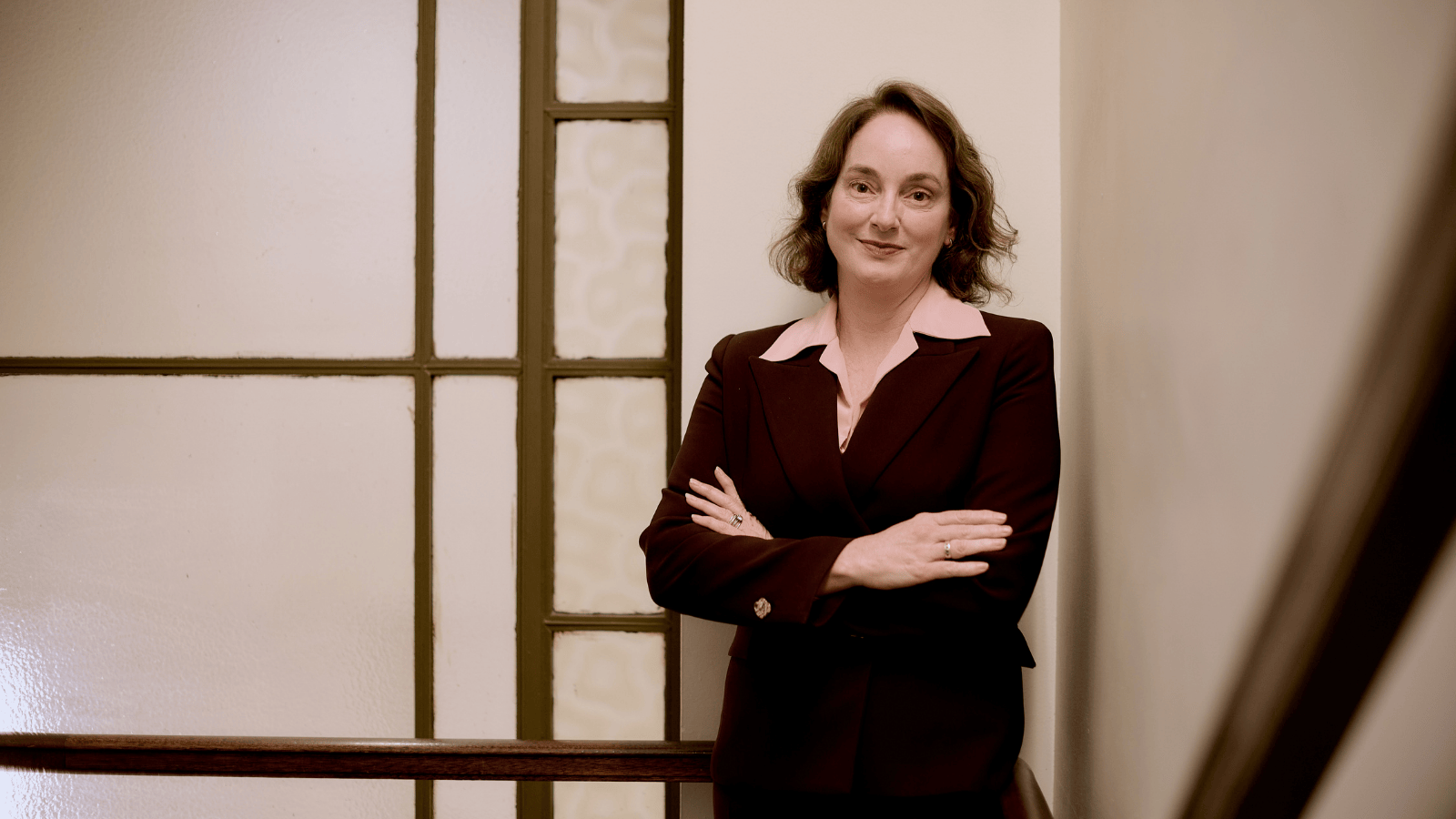
Above: Associate Professor Helen Frazer, Director of St Vincent's Breastscreen
An artificial intelligence (AI) algorithm used to detect breast cancer in screening images can estimate a woman’s risk of developing breast cancer over the next four years more accurately than current methods, according to a paper published in the prestigious international medical journal, The Lancet Digital Health.
The AI-based tool identified women at high risk of developing breast cancer, with nearly one-in-ten of those scored in the top 2% by the tool diagnosed within four years despite previously being given the all-clear.
The tool was developed by the BRAIx program – a partnership led by A/Prof Helen Frazer at St Vincent’s BreastScreen Melbourne – bringing together leading experts across St Vincent’s Hospital Melbourne, St Vincent's Institute of Medical Research, The University of Melbourne, The University of Adelaide, and BreastScreen Victoria, and is funded by the Medical Research Future Fund.
BRAIx’s AI risk-detection tool was developed using mammograms from nearly 400,000 women and then tested on data from almost 96,000 women from Australia. The results were then confirmed in a separate, international population of over 4500 women.
The study found that the BRAIx risk score estimated breast cancer risk more accurately than the factors doctors traditionally rely upon, such as age, breast density, and family history.
For the top 2% of women with the highest BRAIx risk score, the probability of a cancer diagnosis within four years was 9.7%.
This is a level of risk higher than that seen in women who carry inherited BRCA1 or BRCA2 gene mutations, widely known to be high-risk breast cancer indicators.
Additionally, of all women recalled for assessment, 75% had a low BRAIx risk score (below 95th percentile), and only 1% of these women were diagnosed with cancer.
A/Prof Helen Frazer said the study’s results signalled the potential for AI to detect cancer earlier and save more lives by personalising breast cancer screening according to risk.
“With the BRAIx AI risk tool, we can predict a person’s four-year cancer risk automatically and more accurately than current methods,” said A/Prof Frazer.
“Through AI-based risk scores we can better identify women at high risk of developing breast cancer who may benefit from closer monitoring and supplemental testing, while also identifying those at very low risk who may require less frequent screening.
“While population breast cancer screening has been successful – reducing breast cancer deaths by around 40-50% in women aged 50 to 74 – it still largely takes a one-size-fits-all approach, with most women screened in the same way regardless of their personal risk of developing cancer.
“Traditional screening tools that try to estimate breast cancer risk using genetics, breast density, or questionnaires have had limited impact in everyday clinical practice,” said A/Prof Frazer.
A/Prof Davis McCarthy, whose team at St Vincent’s Institute of Medical Research along with researchers at the University of Melbourne conducted the AI model development and statistical analyses, said: “Our ability to develop this state-of-the-art AI technology here in Australia demonstrates both the depth of our local expertise and the broader value of investing in national capability in AI applications in healthcare.”
Head of the Breast Cancer Unit at the University of Melbourne’s School of Population and Global Health, A/Prof Shuai Li said: “The work on the BRAIx risk score is a legacy of the late Professor John Hopper, who was working on it right up to his untimely death in late 2024.
“It developed from Prof Hopper’s more than two decades of researching mammograms for breast cancer markers and risk prediction. He was a pioneer introducing mammogram research to Australia, starting from studying mammographic density in the early 2000s.”
Since 2020, BRAIx has been developing and testing AI models based on a dataset of over 5 million breast screening images of Australian women.
BRAIx’s AI algorithm draws from the dataset to recognise image patterns that assist radiologists in making more accurate decisions, improving both cancer detection and the handling of benign findings.
A/Prof Frazer said she envisioned an AI-supported breast screening program that, in 5 years’ time, sets a baseline screen for all Australian women at age 40 or even younger, and is personalised to their future risk, not their age.
“BRAIx’s AI results show the potential to transform breast screening by inviting all women from 40 years and personalising screening intervals and imaging modalities based on risk,” said A/Prof Frazer.
“Our AI risk work offers the potential for the most significant step change in breast cancer mortality since screening was introduced in Australia in the early 90s.
“Given the potential we’re seeing with AI in the BRAIx program – its accuracy, and the information it provides clinicians – zero deaths from breast cancer is a real and genuine long-term goal,” said A/Prof Frazer.
A/Prof McCarthy said: “By taking this approach we can improve early cancer detection, reduce false alarms, and potentially save lives without increasing costs. Being locally developed, we preserve our capabilities to manage algorithms and avoid dependencies on overseas technology platforms.
“While more studies are needed before it is considered for use in routine care, BRAIx’s ultimate goal is to reduce the number of deaths from breast cancer to zero.”
“The University of Melbourne is excited to continue to advance our understanding of mammogram-based risk scores,” A/Prof Li said. “Our team, for example, is investigating the genetic and lifestyle factors contributing to the risk scores with the aim to provide new insights into breast cancer causes.”