Study explores tailored ED support for people with disabilities
St Vincent’s Hospital Melbourne (SVHM) is playing a key role as a lead trial site in a pilot research project investigating an intervention aimed at improving health outcomes for people with disabilities who attend Emergency Departments.
The project, called BRIDGE-ED, will assess and evaluate the effectiveness of integrating a Disability Liaison Officer (DLO) model of care in Australian Emergency Departments.
It is hoped this model could help improve early identification and management of physical health issues in people with disability (PWD), including those with intellectual disability, through enhanced support providing tailored care in ED settings.
SVHM is one of nine clinical trial sites across six Victorian health services involved in the research, which is being led by Professor Biswadev Mitra from The Alfred Hospital. Each site will trial the pilot for three to six months, with SVHM’s pilot expected to commence mid-year.
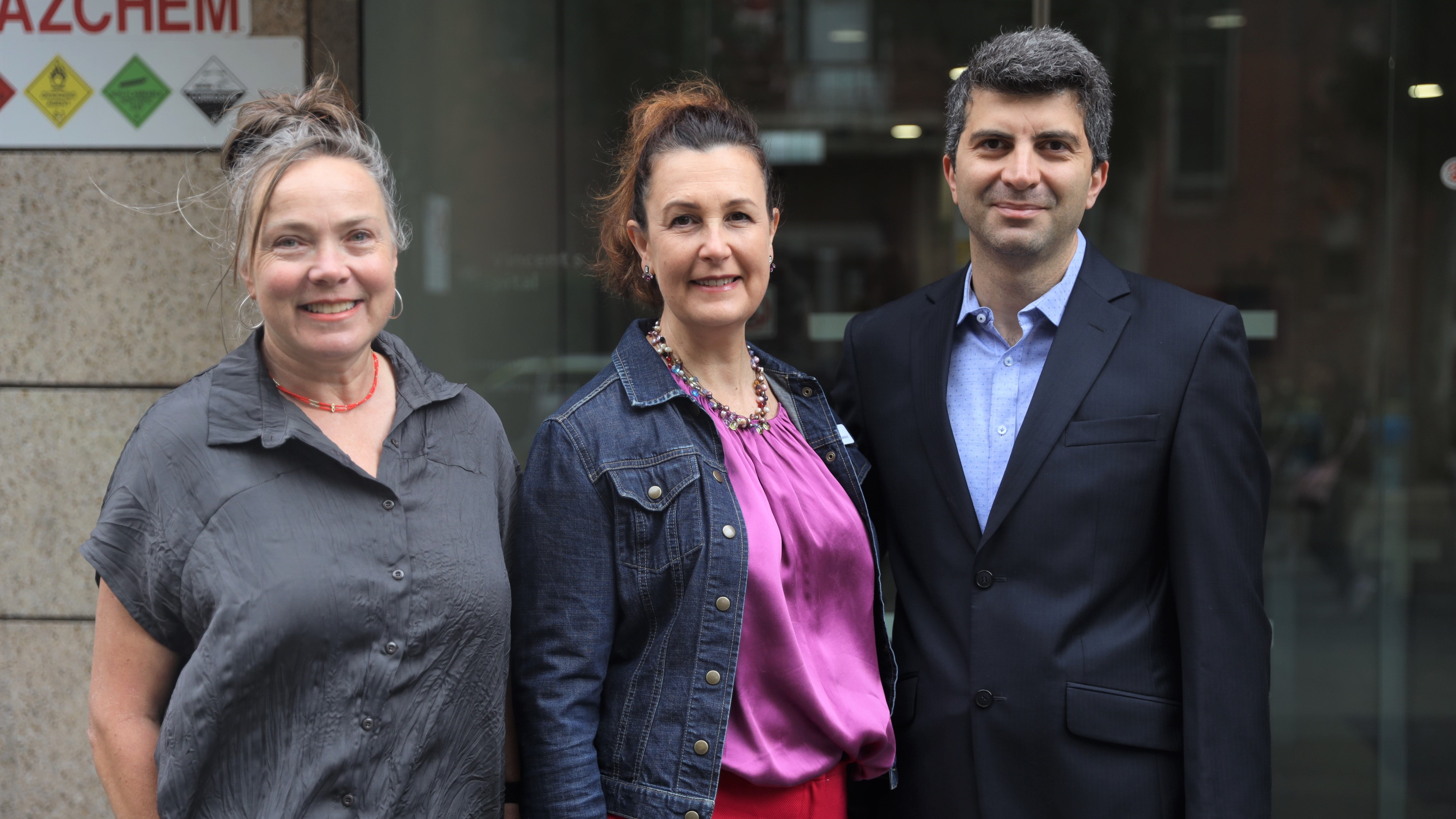
Above: From left to right, Carlee Holmes, Karen Phipps and A/Prof Hamed Akhlaghi
Emergency Physician Associate Professor Hamed Akhlaghi, Lead Disability Liaison Officer Karen Phipps, and Senior Physiotherapist, Young Adult Complex Disability Service Carlee Holmes, are the lead investigators for the project at SVHM.
“For many people, going to the emergency department is stressful. For people with intellectual disability, it can be even harder, their support needs may not be readily visible. The noise, bright lights and fast pace can feel overwhelming. There may not be enough time or support to communicate in the way that works best for them, and assumptions about capacity can affect whether they feel heard, respected and safe,” said Karen Phipps.
According to figures from the Australian Bureau of Statistics, 5.5 million Australians are currently living with a disability.
Prevalence auditing conducted by St Vincent’s Melbourne in May 2022 identified that more than 30 per cent of people who present to SVHM’s ED are likely to be a person with a disability. The findings also showed that Emergency patients likely to have a disability presented to SVHM an average of 9.3 times compared with 2.1 times for patients without disability.
A/Prof Hamed Akhlaghi said embedding a Disability Liaison Officer within the ED could provide an opportunity to improve communication between the medical team and patient in busy ED settings.
“The aim would be to help reduce gaps in understanding and potentially prevent patients’ needs being compromised due to limited awareness of disabilities or the challenges faced by patients, family members and carers in conveying these issues directly to the treating team,” said A/Prof Akhlaghi.
“Having someone based in the ED who understands the specific needs of these groups, can actively assess those needs, and work collaboratively with the treating team by providing the essential information they require in a timely manner, could help improve care management and potentially enhance the overall patient experience.”
Evolving care
Over the past 10-15 years, the composition of the ED team has evolved. Today, it includes a broader mix of roles that incorporates allied health professionals, geriatricians and nurse practitioners. These additions have been associated with positive impacts on patient care.
“Introducing a Disability Liaison Officer could represent another potential step towards further strengthening the ED team and enhancing the outcomes for patients with disabilities who are seeking emergency care,” said A/Prof Akhlaghi.
The project, which was awarded a $2 million Medical Research Future Fund (MRFF) grant, is currently in its pre-intervention phase. This phase will include how best during the trial to flag a person with disability in the system as soon as they present at ED reception, to ensure their needs can be identified and addressed promptly.